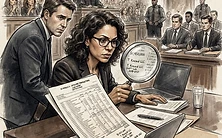
The conviction of Andrew Left, the founder of Citron Research, by a federal jury in Los Angeles on June 1, 2026, represents more than just the downfall of a prominent market commentator; it signals a structural shift in the enforcement of market manipulation laws. Found guilty of one count of participating in a securities fraud scheme and 12 substantive counts of securities fraud, Left’s case provides a roadmap for how the Department of Justice and the SEC intend to police the intersection of public commentary and private trading.
The Mechanics of the Scheme
Prosecutors successfully argued that Left’s public reports were not merely independent research but components of a coordinated manipulation scheme. The evidence highlighted a critical "short-and-distort" mechanism: Left would provide hedge funds with advance notice of his upcoming reports in exchange for a share of the resulting trading profits. Furthermore, the government demonstrated that Left frequently took positions opposite to his public recommendations, often closing out his short positions shortly after publication to capitalize on the immediate price volatility he induced.
Forensic Implications for Activism
For the broader activist short-selling community, the implications are profound. The trial revealed that Left utilized encrypted messaging and systematically deleted electronic communications to conceal his activities. His subsequent false statements to federal agents during the investigation proved to be a significant aggravating factor. This case underscores that the "research" defense—the argument that short sellers are merely providing a public service by exposing corporate malfeasance—is no longer a shield against criminal liability when the underlying trading behavior is deceptive.
Legal analysts note that the conviction effectively narrows the "safe harbor" for market commentary. By establishing that "half-truths" and undisclosed conflicts of interest can constitute actionable fraud, the DOJ has signaled that the era of unchecked, anonymous, or coordinated short-selling campaigns is under intense scrutiny. As the industry digests this verdict, we expect to see a significant "chilling effect" on the dissemination of activist research, as firms move to formalize compliance protocols to avoid the "short-and-distort" label.
Key Takeaways
- The jury convicted Left on 13 counts, including a primary securities fraud scheme, rejecting the defense that his actions were protected speech.
- Evidence of "front-running" his own reports by sharing them with hedge funds in exchange for profit-sharing was central to the prosecution's success.
- The case highlights the DOJ's increased willingness to pursue criminal charges for market manipulation, moving beyond traditional civil SEC enforcement.
- Future activist research will likely face higher evidentiary standards regarding the independence of their positions and the transparency of their trading activities.
Sources
- US Department of Justice — Details on the $21 million profit scheme and conviction, June 2, 2026.
- Fenwick & West LLP — Legal analysis of the conviction and its impact on 'short-and-distort' enforcement, June 24, 2026.
- The Irish Times — Reporting on the implications for investors publishing market commentary, June 2, 2026.
- New York Post — Coverage of the verdict and its impact on Wall Street, June 2, 2026.
Original reporting by Fenwick & West LLP. This article is desk analysis prepared by The Forensic Ledger from publicly available sources, summarized with citation to the original.
Not investment advice. This is original reporting and analysis prepared by The Forensic Ledger from publicly available data. Nothing here is a recommendation to buy, sell, or hold any security. Always consult the original source and a licensed professional. See our full disclaimer and source-citation policy.