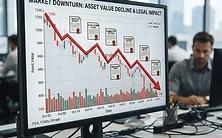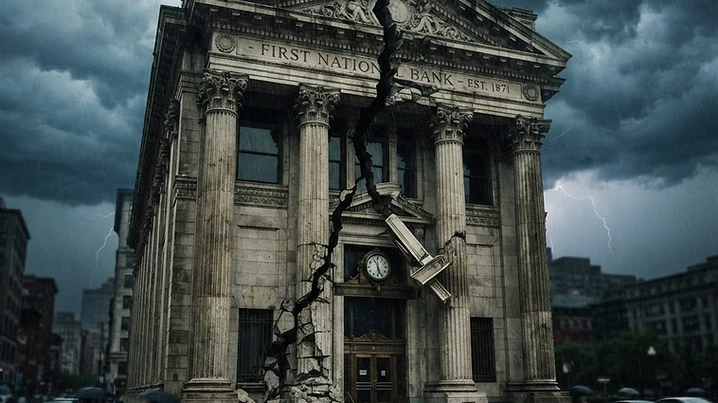
The commercial real estate crisis isn't coming. It's here. And regional banks are sitting on the losses.
Office vacancy rates are at record highs. Refinancing walls are approaching for loans that were underwritten when rates were near zero. And the banks that hold these loans — primarily small and mid-sized regional banks — are the short sellers' target.
The CRE Time Bomb
Commercial real estate loans on bank balance sheets are enormous. Trillions in CRE debt is maturing over the next few years, and refinancing at current rates means property values must fall — or borrowers must default.
The math is brutal. A building purchased at a 4% cap rate with a 3% mortgage cannot be refinanced at 7%. The cash flow doesn't work. Either the borrower brings cash to the table or the lender takes the keys.
Why Regional Banks
The large money-center banks have minimal exposure to CRE relative to their capital. But regional and community banks have concentrated CRE portfolios. For some, CRE loans represent a majority of their total loan book.
Short sellers recognize this asymmetry. They're not shorting JPMorgan — they're shorting the banks where a CRE default wave could be existential.
Key Takeaways
- Commercial real estate faces a refinancing crisis as low-rate loans mature into a high-rate environment
- Regional banks hold disproportionate CRE exposure relative to their capital
- Office vacancy rates at record highs undermine property valuations and loan collateral
- Short sellers are targeting banks where CRE defaults could threaten solvency
The Bottom Line
The CRE crisis is a slow-moving train wreck. The losses are real — the only question is who absorbs them. Short sellers believe the answer is regional bank shareholders. Whether they're right depends on how fast the losses materialize — and whether regulators allow banks to extend and pretend.
One thing is certain: in commercial real estate, the rent is due. And the bill is much higher than anyone expected.
Original reporting by Federal Reserve. This article is desk analysis prepared by The Forensic Ledger from publicly available sources, summarized with citation to the original.
Not investment advice. This is original reporting and analysis prepared by The Forensic Ledger from publicly available data. Nothing here is a recommendation to buy, sell, or hold any security. Always consult the original source and a licensed professional. See our full disclaimer and source-citation policy.