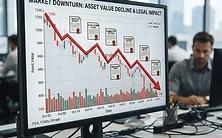
Crypto has always been a short seller's paradise — and a short seller's graveyard. The volatility cuts both ways, and the companies orbiting the crypto economy are no exception.
As Bitcoin oscillates between euphoria and despair, the public companies tied to it — exchanges, miners, and service providers — are being whipsawed. Short sellers are positioning for the downside, but they're being careful. In crypto, the squeeze can be lethal.
The Exchange Problem
Crypto exchanges like Coinbase have a simple business model: they make money when crypto is traded. The problem is that trading volume is highly correlated with crypto prices — and crypto prices are notoriously cyclical.
When Bitcoin is rising, everyone trades. When it's falling, volume dries up. This means exchange revenue is essentially a leveraged bet on crypto prices — and short sellers see this as a structural vulnerability.
The Miner Dilemma
Crypto miners face an even more brutal math. Their revenue depends on crypto prices and network difficulty. Their costs — electricity, hardware, facilities — are fixed. When crypto prices fall, margins compress fast.
Many miners took on debt during the boom to buy hardware. Now they're servicing that debt with compressed revenue. Short sellers see this as a ticking clock.
Key Takeaways
- Crypto-adjacent stocks are highly volatile, creating both short opportunities and squeeze risks
- Exchange revenue is leveraged to crypto trading volume, which is cyclical
- Crypto miners face fixed costs and variable revenue, creating margin compression risk
- Regulatory uncertainty adds an additional layer of downside risk
The Bottom Line
Shorting crypto stocks is not for the faint of heart. The volatility that creates the opportunity also creates the risk. But for short sellers who can manage the squeeze risk, the structural vulnerabilities of crypto-adjacent companies are real — and the cycle, as always, will eventually turn.
In crypto, the only constant is change. And change is where short sellers make their living.
Original reporting by CoinDesk. This article is desk analysis prepared by The Forensic Ledger from publicly available sources, summarized with citation to the original.
Not investment advice. This is original reporting and analysis prepared by The Forensic Ledger from publicly available data. Nothing here is a recommendation to buy, sell, or hold any security. Always consult the original source and a licensed professional. See our full disclaimer and source-citation policy.