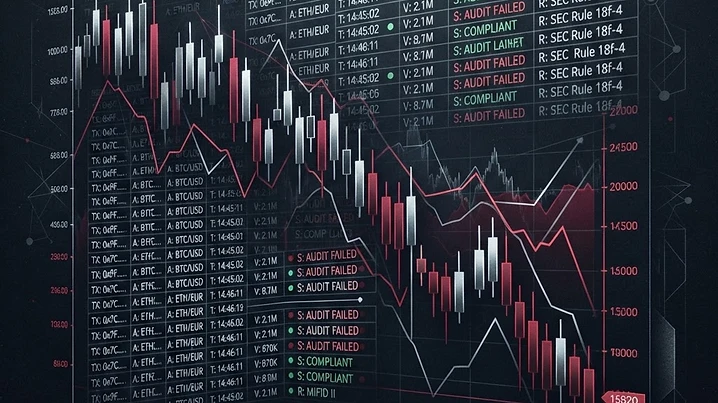
Federal authorities have established a rigorous blueprint for prosecuting activist short campaigns that cross the line from forensic research into market manipulation. Analysis of joint enforcement actions pursued by the Department of Justice (DOJ) and the Securities and Exchange Commission (SEC) reveals that federal investigators are no longer simply assessing the factual accuracy of bearish commentary. Instead, regulators are scrutinizing the microscopic gap between an activist's public rhetoric and their private execution logs.
The Mechanics of Regulatory Scrutiny
Recent indictments and civil charges against prominent short commentators demonstrate how federal agencies deconstruct trading patterns. According to charging documents from the U.S. Department of Justice, investigators routinely trace whether commentary publishers set limit orders to cover positions well before publicizing aggressive target prices. In several instances documented by prosecutors, commentators told public audiences that targeted stocks were headed to fractional values while simultaneously executing automated orders to close short positions upon modest intraday drops.
The regulatory focus emphasizes asymmetric timing advantages. When short publishers purchase short-dated options expiring within days of a planned report release, authorities view this not merely as aggressive positioning, but as potential evidence of exploiting private control over a market-moving catalyst. Public assertions on television or social media claiming a fund retains full exposure—when internal broker records show extensive liquidation—now form the bedrock of federal fraud counts.
Institutional Reporting Shifts Under Rule 13f-2
This criminal and civil crackdown operates in tandem with structural reporting changes. As noted by White & Case LLP, the SEC's adoption of Rule 13f-2 and Form SHO imposes rigorous monthly disclosure obligations on institutional investment managers. Managers meeting a monthly average gross short position of at least $10 million, or 2.5% of outstanding shares in a reporting issuer, must report granular activity data.
For non-reporting issuers, the filing threshold drops to a gross short position of $500,000. These disclosures equip forensic analysts and enforcement staff with quantitative records that highlight whether large players are orchestrating coordinated liquidity events or quietly unwinding positions into panic selling they helped generate.
Legal Dynamics for Targeted Issuers
For companies on the receiving end of activist campaigns, regulatory enforcement provides both a framework for defense and a reminder of operational hazards. Corporate analysis from Fenwick & West LLP underscores that targeted public companies are increasingly tracking options order flow and borrow availability in the hours leading up to negative research drops.
However, legal observers consistently caution that retaliatory complaints can backfire. Public companies that invite regulators to review aggressive short sellers often invite equal scrutiny into their own accounting practices, as investigations frequently test the fundamental veracity of the allegations raised in the underlying short research.
Key Takeaways
- Federal agencies are actively using broker records to compare the actual covering behavior of short sellers against their public price targets.
- Short-dated options trading timed directly ahead of research publications serves as a major focal point in federal market manipulation complaints.
- Rule 13f-2 implementation mandates monthly Form SHO filings for institutional positions crossing $10 million or 2.5% of float.
- Targeted issuers are deploying forensic trade analysis to detect coordinated unwinds, while navigating the risks of reciprocal regulatory inquiries.
Sources
- U.S. Department of Justice — Federal indictment and securities fraud details on activist short-selling schemes, February 2025.
- White & Case LLP — Legal analysis of DOJ and SEC short-selling enforcement actions and Rule 13f-2 reporting requirements, September 2024.
- Fenwick & West LLP — Practical guidance and pattern analysis on identifying manipulative short campaigns, 2024.
Original reporting by U.S. Department of Justice. This article is desk analysis prepared by The Forensic Ledger from publicly available sources, summarized with citation to the original.
Not investment advice. This is original reporting and analysis prepared by The Forensic Ledger from publicly available data. Nothing here is a recommendation to buy, sell, or hold any security. Always consult the original source and a licensed professional. See our full disclaimer and source-citation policy.