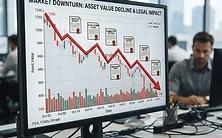
Gildan Activewear, the Canadian apparel powerhouse known for its ubiquitous blank t-shirts, is facing a crisis of confidence that could unravel years of perceived stability. In a bombshell report released today, Jehoshaphat Research took a sledgehammer to the company’s growth narrative, alleging that Gildan’s reported revenue increases are little more than a mirage created by sophisticated financial engineering. The market’s reaction was swift and brutal: Gildan’s NYSE-listed shares plunged 18.7%, wiping out billions in market capitalization in a single trading session.
The 'Organic Growth' Illusion
The crux of the Jehoshaphat Research thesis is that Gildan’s organic growth has actually been negative for years. According to the report, the company has successfully obscured this underlying decline through a series of sales practices and financial maneuvers designed to inflate top-line figures. As reported by Morningstar, the short seller claims that while Gildan appears to be growing, the reality is a business in structural decay, propped up by accounting choices that mislead the investing public.
Jehoshaphat’s disclosure of a short position in the company added fuel to the fire, as the firm detailed how Gildan’s 'financial engineering' has allowed it to maintain the appearance of a healthy, expanding enterprise. For investors who viewed Gildan as a safe-haven value play, the allegations of negative organic growth are a direct hit to the company’s core valuation.
Legal Vultures Circle as Class Action Looms
Whenever a stock drops nearly 20% on allegations of accounting irregularities, the legal community is never far behind. The Rosen Law Firm has already announced an investigation into potential securities claims on behalf of Gildan shareholders, according to Morningstar. The investigation will focus on whether Gildan issued materially misleading business information to the market, specifically regarding its sales practices and growth metrics.
This pattern—a short report followed by a massive price drop and a flurry of class-action lawsuits—has become the standard lifecycle of a modern corporate scandal. As Labaton Keller Sucharow notes, well-researched short reports often serve as a 'Bat-Signal' for law firms to step in and attempt to recover losses for harmed investors. For Gildan, the legal battle is likely just beginning.
The Road Ahead for Gildan
Gildan now finds itself in the defensive crouch typical of companies targeted by activist shorts. The company will need to provide granular evidence to debunk Jehoshaphat’s claims of negative organic growth if it hopes to win back the trust of institutional investors. However, in the world of forensic accounting, once the 'financial engineering' label is applied, it is notoriously difficult to wash off. With the stock in freefall and regulators likely taking notice, the coming weeks will determine if Gildan is a victim of a 'short and distort' campaign or the latest example of corporate smoke and mirrors.
Key Takeaways
- Gildan Activewear (GIL) shares fell 18.7% following a short report from Jehoshaphat Research.
- The report alleges Gildan used financial engineering to hide years of negative organic growth.
- The Rosen Law Firm has launched a securities class action investigation into the company.
- The allegations center on misleading sales practices and inflated revenue figures.
The Bottom Line
Gildan Activewear is fighting for its reputation after Jehoshaphat Research alleged that its growth is a manufactured illusion, triggering a massive sell-off and a looming legal battle that threatens to expose the company's true financial health.
Original reporting by Morningstar. This article is desk analysis prepared by The Forensic Ledger from publicly available sources, summarized with citation to the original.
Not investment advice. This is original reporting and analysis prepared by The Forensic Ledger from publicly available data. Nothing here is a recommendation to buy, sell, or hold any security. Always consult the original source and a licensed professional. See our full disclaimer and source-citation policy.