Federal prosecutors and securities regulators have intensified their scrutiny of activist short selling, setting strict boundaries around trading conduct that accompanies public research campaigns. Recent parallel actions by the Department of Justice (DOJ) and the Securities and Exchange Commission (SEC) against activist short seller Andrew Left and Citron Capital signal an aggressive posture against so-called "short-and-distort" tactics, where market participants allegedly take short positions, publish sensational claims, and quickly reverse their trades to profit from immediate retail or algorithmic panics.
The Mechanics of Regulatory Enforcement
According to DOJ filings and parallel SEC civil litigation, regulators are not penalizing negative research per se, but rather the divergence between public representations and private execution. The allegations highlight cases where a researcher publicized targeted, sensationalized sell recommendations with extreme price targets while simultaneously covering positions or executing contrary trades into the resulting market downturn. The SEC's action alleged a multi-year scheme generating approximately $20 million in illicit profits, underscoring that closing out positions contrary to public guidance constitutes actionable market manipulation under federal securities laws.
Historically, short sellers operated with significant latitude under the banner of free speech and fundamental opinion. However, legal analysis from corporate defense firms including White & Case emphasizes that prosecutors are now viewing rapid position reversals around catalyst events as evidence of manipulative intent rather than legitimate price discovery. The parallel nature of the actions—pairing civil fraud allegations with criminal indictments carrying statutory maximum sentences of up to 20 years per count—sets a high-stakes precedent for activist research desks.
Heightened Transparency: Rule 13f-2 and Form SHO
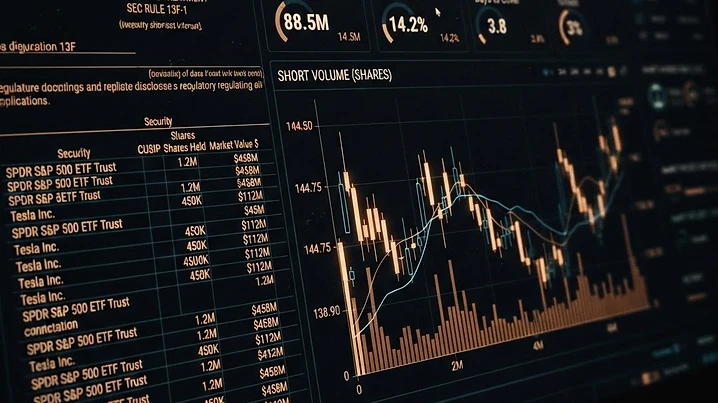
This litigation wave coincides with structural changes to short sale disclosures mandated by the SEC under Rule 13f-2. The rule obligates institutional investment managers exercising investment discretion over gross short positions meeting specific thresholds to submit confidential Form SHO filings within 14 calendar days after each month's end.
For reporting issuers registered under Section 12 or subject to Section 15(d) of the Exchange Act, the disclosure applies to monthly average gross short positions exceeding $10 million or representing 2.5% or more of shares outstanding. For non-reporting issuers, the reporting trigger drops sharply to a gross short position of $500,000 on any settlement date during the calendar month. The SEC's planned publication of aggregated short data will make extended anonymous campaigns substantially harder to execute, arming corporate targets and regulators with granular monthly movement records.
Strategic Considerations for Target Issuers
While corporate issuers have historically pushed for aggressive enforcement against short sellers, legal practitioners note a paradoxical risk: lodging formal complaints often invites regulatory attention onto the company itself. Because activist reports typically allege underlying accounting irregularities or governance failures, regulators reviewing claims of market manipulation frequently launch concurrent investigations into the reporting integrity of the targeted company.
As a consequence, corporate defense strategies are pivoting away from public sparring toward structured forensic audits. In an environment marked by mandatory short reporting and active DOJ monitoring, companies targeted by activist campaigns must weigh whether initiating litigation will provide relief or inadvertently expose their own accounting to intense federal scrutiny.
Key Takeaways
- Federal agencies are aggressively differentiating legitimate investigative short selling from manipulative "short-and-distort" trading schemes.
- Parallel civil and criminal enforcement hinges on the discrepancy between published price targets and clandestine position liquidations.
- SEC Rule 13f-2 creates mandatory monthly Form SHO reporting thresholds of $10M or 2.5% of outstanding shares for reporting companies.
- Target companies face collateral exposure, as alerting authorities to short attacks frequently triggers reciprocal regulatory probes into their own books.
Sources
- Harvard Law School Forum on Corporate Governance — Analysis of DOJ and SEC enforcement actions regarding short sellers and Rule 13f-2, September 24, 2024
- White & Case LLP — Insights on managing short attacks, market manipulation claims, and Form SHO compliance thresholds, September 5, 2024
- U.S. Securities and Exchange Commission — SEC enforcement results and reporting compliance disclosures, December 17, 2024
Original reporting by Harvard Law School Forum on Corporate Governance. This article is desk analysis prepared by The Forensic Ledger from publicly available sources, summarized with citation to the original.
Not investment advice. This is original reporting and analysis prepared by The Forensic Ledger from publicly available data. Nothing here is a recommendation to buy, sell, or hold any security. Always consult the original source and a licensed professional. See our full disclaimer and source-citation policy.