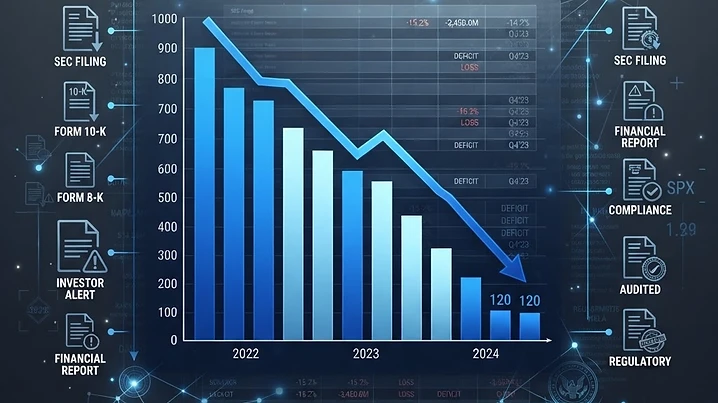
Regulatory scrutiny on public markets showed a pronounced pullback through 2025, according to a recent analysis by law firm Paul Weiss reported by Traders Magazine. The U.S. Securities and Exchange Commission (SEC) brought 313 standalone enforcement actions in 2025, representing the lowest annual volume recorded in a decade. The figure marks a 27% drop from the 431 cases filed in 2024 and a 38% decrease compared to the 501 standalone actions initiated in fiscal year 2023.
While gross enforcement caseloads retreated broadly, the composition of SEC actions reflected an increased relative focus on core issuer representations and capital raises. Securities offering fraud comprised 27% of all SEC enforcement actions in FY 2025, rising from 22% in FY 2024, demonstrating that direct investor solicitations remained a baseline regulatory priority even as broad caseload numbers contracted.
Structural Changes in Investigation Clearances
The drop in standalone actions reflects significant internal procedural overhauls implemented under SEC leadership. Formal orders of investigation—the procedural mechanism that empowers agency staff to subpoena documents, communications, and sworn witness testimony—now require approval by a majority of SEC Commissioners.
Historically, this investigatory authority was broadly delegated directly to the Director of Enforcement, enabling staff attorneys to rapidly escalate inquiries into formal proceedings without requiring early Commission-level consensus. Requiring majority Commissioner votes creates a formal governance hurdle that naturally slows the rate of initiated subpoena-backed investigations, curbing the velocity of eventual formal complaints.
Implications for Forensic Research and Short Campaigns
For forensic analysts and short sellers, the slowdown in agency-level standalone actions shifts the burden of policing corporate disclosure squarely onto private market participants. Regulatory interventions historically provide critical market confirmation for activist short campaigns; when formal investigations dwindle, companies targeted by short sellers face fewer parallel regulatory probes that would otherwise validate whistleblower or external forensic findings.
Simultaneously, the SEC has continued implementing structural reporting mechanisms such as Exchange Act Rule 13f-2 and Form SHO, designed to track large aggregate gross short positions. With federal agencies filing fewer direct enforcement actions while maintaining tighter oversight on institutional shorting disclosures, activist researchers must rely on demonstrably higher standards of primary evidence—such as accounting reconciliations and expert witness testing—to substantiate corporate claims without expecting swift regulatory intervention.
Key Takeaways
- The SEC brought 313 standalone enforcement actions in 2025, the lowest single-year total in a decade and down 27% year-over-year.
- Formal orders of investigation authorizing staff subpoenas now require direct majority Commissioner approval, slowing the pipeline of formal actions.
- Securities offering fraud grew as a share of total agency actions, making up 27% of the FY 2025 docket compared to 22% in FY 2024.
Sources
- Traders Magazine — Analysis of Paul Weiss research tracking SEC standalone enforcement activity, February 5, 2026.
- White & Case LLP — Legal analysis of regulatory enforcement frameworks and SEC Rule 13f-2 disclosure rules.
Original reporting by Traders Magazine. This article is desk analysis prepared by The Forensic Ledger from publicly available sources, summarized with citation to the original.
Not investment advice. This is original reporting and analysis prepared by The Forensic Ledger from publicly available data. Nothing here is a recommendation to buy, sell, or hold any security. Always consult the original source and a licensed professional. See our full disclaimer and source-citation policy.