Regulatory watchdogs are intensifying enforcement against the financial intermediaries that facilitate cross-border capital flows. In an administrative order, the U.S. Securities and Exchange Commission (SEC) announced a settlement with Haywood Securities (USA) Inc.—the U.S.-registered subsidiary of Vancouver-based broker-dealer Haywood Securities Inc.—requiring the firm to pay a $750,000 penalty and submit to a censure for repeated violations of federal anti-money laundering (AML) provisions.
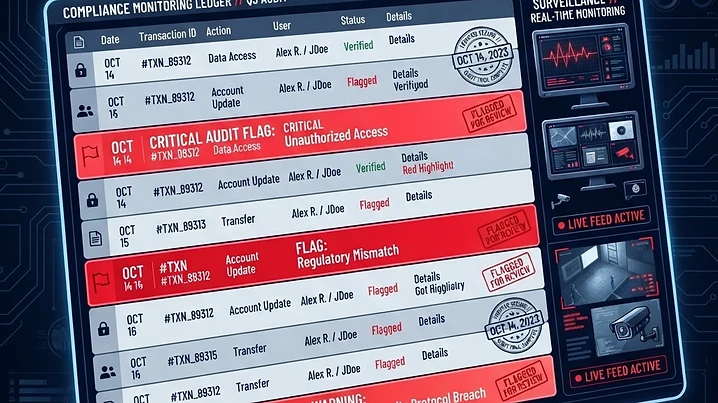
The regulatory action centers on Haywood USA’s failure to file Suspicious Activity Reports (SARs) with the Financial Crimes Enforcement Network (FinCEN). According to the Commission, the broker-dealer identified multiple suspicious red flags during client account onboarding and continuous due diligence—including rapid-fire transactions exceeding $5,000 in volatile equity securities—yet repeatedly neglected to escalate and file SARs mandated by the Bank Secrecy Act and the firm’s internal protocols between May 2021 and early 2026.
The Gatekeeper Dilemma in Micro-Cap Clearing
Forensic analysts tracking OTC and small-cap market manipulation have long focused on cross-border broker-dealers as critical structural choke points. Canadian-affiliated brokerages frequently handle substantial volumes of low-float Canadian and U.S. dual-listed equities, penny stocks, and resource shell vehicles—sectors historically prone to aggressive pump-and-dump orchestration and wash trading.
According to the SEC's findings, Haywood USA failed to execute proper ongoing surveillance of accounts explicitly marked as high-risk, while failing to provide necessary compliance training to registered representatives handling transaction flow. Under Section 17(a) of the Securities Exchange Act and Rule 17a-8, broker-dealers are not permitted to treat SAR reporting as discretionary; when transactional anomalies match regulatory red flags, escalation is mandatory to provide law enforcement with actionable money-trail data.
Strategic Pivot in Atkins-Era Enforcement
The action against Haywood USA aligns with the SEC’s operational shift under Chairman Paul Atkins and Enforcement Director David Woodcock. While the current Commission leadership has pared back certain legacy proceedings in retail crypto litigation, it has aggressively redirected enforcement resources toward "gatekeeper accountability" and traditional financial crime architecture.
Haywood USA consented to the entry of the SEC order without admitting or denying the findings, agreeing to a formal cease-and-desist order alongside the $750,000 fine. The firm has reportedly engaged an independent compliance consultant and overhauled its compliance department to remediate automated monitoring workflows. Nevertheless, the action serves as a stark warning to offshore brokerages operating U.S. subsidiaries that supervisory neglect in monitoring high-risk customer turnover will face sharp regulatory penalties.
Key Takeaways
- The SEC ordered Haywood Securities (USA) to pay $750,000 to resolve charges over systematic failures to file Suspicious Activity Reports (SARs).
- The misconduct spanned May 2021 through early 2026, involving ignored red flags on transactions exceeding $5,000.
- Regulators emphasized that the firm failed to monitor high-risk trading accounts and neglected required employee compliance training.
- The settlement reflects heightened regulatory scrutiny on cross-border broker-dealers acting as gateways for high-risk OTC and micro-cap trading.
Sources
- Investment Executive — Analysis of SEC administrative action against Haywood Securities (USA) Inc., September 14, 2026.
- U.S. Securities and Exchange Commission — Administrative Release and settled proceedings regarding Exchange Act Rule 17a-8 AML non-compliance, September 2026.
Original reporting by Investment Executive. This article is desk analysis prepared by The Forensic Ledger from publicly available sources, summarized with citation to the original.
Not investment advice. This is original reporting and analysis prepared by The Forensic Ledger from publicly available data. Nothing here is a recommendation to buy, sell, or hold any security. Always consult the original source and a licensed professional. See our full disclaimer and source-citation policy.