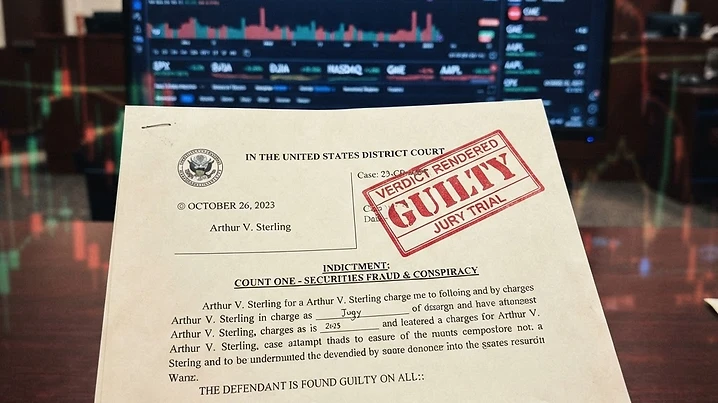
A federal jury in the U.S. District Court for the Central District of California has returned a guilty verdict against an activist short seller for securities fraud and market manipulation. The case centered on a 'short-and-distort' scheme, where the defendant allegedly utilized his platform as a market commentator to disseminate false information about targeted companies to profit from the resulting stock price volatility.
Assistant Attorney General A. Tysen Duva noted that the defendant exploited retail investors, characterizing the behavior as a calculated effort to profit at the expense of ordinary market participants. This conviction serves as a critical data point in the broader regulatory effort to curb manipulative short-selling practices.
For the forensic community, this case underscores the shifting legal landscape regarding the publication of short research. While activist short selling remains a legitimate tool for market discovery, the line between aggressive research and criminal manipulation is being drawn with increasing clarity by the DOJ and SEC. Analysts and investors should note that the 'short-and-distort' defense is becoming increasingly difficult to maintain in the face of coordinated federal enforcement.
Key Takeaways
- A federal jury convicted an activist short seller of securities fraud and market manipulation.
- The case involved a 'short-and-distort' scheme where the defendant allegedly spread false rumors to profit from stock price declines.
- The conviction highlights the DOJ and SEC's ongoing commitment to prosecuting manipulative short-selling practices.
Sources
- Find Know Do — Federal jury convicts short seller of securities fraud, June 3, 2026.
Original reporting by Find Know Do. This article is desk analysis prepared by The Forensic Ledger from publicly available sources, summarized with citation to the original.
Not investment advice. This is original reporting and analysis prepared by The Forensic Ledger from publicly available data. Nothing here is a recommendation to buy, sell, or hold any security. Always consult the original source and a licensed professional. See our full disclaimer and source-citation policy.