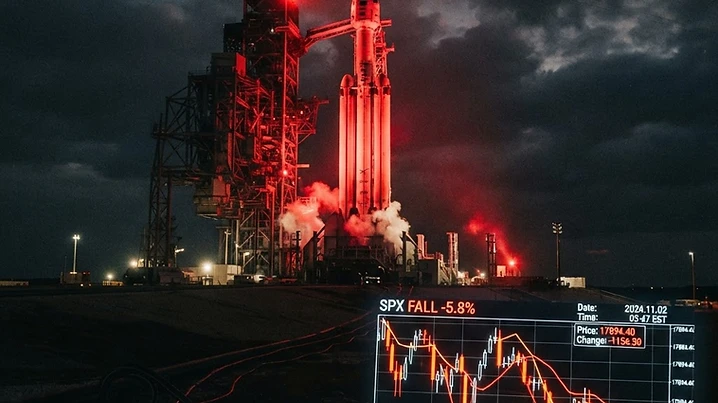
For years, SpaceX seemed immune to the laws of financial physics. But as the company’s stock retreats toward its initial public offering price, the bears are smelling blood in the water. Short sellers have loaded up on a massive bet against the aerospace pioneer, with approximately 185 million shares now sold short Short sellers load up against SpaceX as stock drops ... - CNBC.
A Gravity-Defying Short Position
According to data from S3 Partners, the short interest in SpaceX now represents roughly 29% of the company's publicly tradable float Short sellers load up against SpaceX as stock drops ... - CNBC. This is a staggering figure for a company that has dominated the private space flight industry and recently made waves in the public markets. The surge in short activity suggests that institutional investors are increasingly skeptical of the company’s valuation and its ability to maintain its breakneck pace of innovation.
The retreat to the IPO price level is a psychological blow for a stock that was once the darling of the 'new space' economy. As the share price dips, the pressure on Musk to deliver consistent results—and perhaps more importantly, consistent profits—has never been higher.
The Musk Factor and Market Volatility
Shorting an Elon Musk-led company has historically been a dangerous game. The 'Tesla Squeeze' of years past remains a cautionary tale for many on Wall Street. However, the current market environment is different. With interest rates remaining stubborn and the appetite for high-growth, pre-profit companies waning, short sellers believe they have the upper hand.
The 29% short interest creates a volatile tinderbox. Any positive news—a successful Starship launch or a major new government contract—could trigger a massive short squeeze, forcing bears to buy back shares at any price to cover their positions. Conversely, if the stock breaks below its IPO support level, the resulting sell-off could be catastrophic.
Regulatory Shadows
While the SpaceX short interest is a market-driven event, it occurs against a backdrop of increased regulatory scrutiny of all Musk-related entities. The SEC and DOJ’s recent success in prosecuting other high-profile market figures has emboldened short sellers to take more aggressive stances, knowing that the 'Musk premium' may no longer be enough to ward off forensic analysis of the company's underlying fundamentals.
Key Takeaways
- Massive Short Interest: 185 million shares of SpaceX are currently sold short, representing 29% of the float.
- Price Pressure: The stock has retreated to its IPO price, a critical technical and psychological support level.
- Squeeze Potential: The high concentration of short positions makes the stock highly susceptible to a short squeeze on any positive catalysts.
- Institutional Skepticism: The scale of the short bet indicates a significant shift in institutional sentiment toward Musk’s aerospace venture.
The Bottom Line
SpaceX is no longer just a rocket company; it’s a high-stakes financial battlefield. With nearly a third of the float bet against it, the next few months will determine whether Musk can once again defy the bears or if SpaceX is finally coming back down to earth.
Original reporting by CNBC. This article is desk analysis prepared by The Forensic Ledger from publicly available sources, summarized with citation to the original.
Not investment advice. This is original reporting and analysis prepared by The Forensic Ledger from publicly available data. Nothing here is a recommendation to buy, sell, or hold any security. Always consult the original source and a licensed professional. See our full disclaimer and source-citation policy.