For law enforcement agencies conducting complex undercover operations, the synchronization of real-time communication and forensic-grade evidence logging is a critical operational necessity. Modern command-and-control technology now allows agencies to manage undercover handsets with high precision, utilizing agency-held keys to oversee communications while ensuring the officer’s position and safety status are monitored without compromising the secrecy of the operation. This technology is intended for authorized law enforcement personnel who must navigate high-risk environments where digital evidence integrity is paramount for successful prosecution.
The Capability: Agency-Held Command and Control
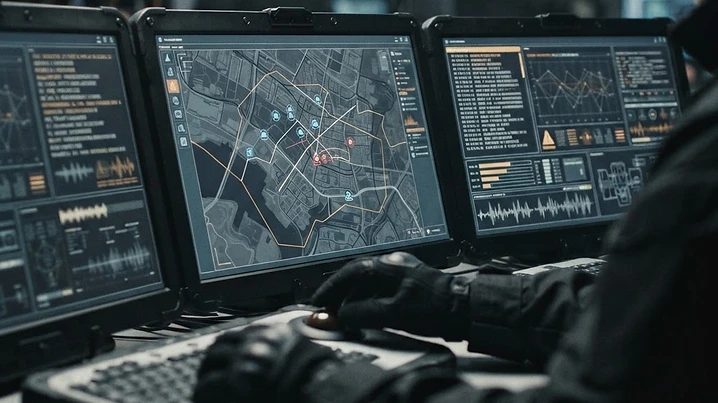
The capability centers on a managed handset environment where the agency retains the master keys to all encrypted communication channels used by the undercover officer. This ensures that in the event of an emergency, commanders have immediate access to the officer’s location and status. Furthermore, the technology provides a unified dashboard that captures interactions across multiple communication platforms, consolidating disparate digital touchpoints into a single, hashed case file. The system allows for live AI-driven transcription, which aids in immediate tactical decision-making while concurrently building a chronological transcript for the eventual judicial record.
Closing the Operational Gap
The primary operational gap addressed by this technology is the fragmentation of evidence and the risk to officer safety. Previously, if an officer utilized multiple messaging platforms, the agency struggled to maintain a consistent evidentiary record, often leading to gaps in the chain of custody. By centralizing all communication through a managed gateway, the agency ensures that every interaction is logged, timestamped, and cryptographically verified. This removes the need for officers to manage evidence logs manually, allowing them to focus entirely on the operational requirements of the undercover assignment. Additional information can be found at The Forensic Ledger.
Protecting Evidence Integrity
Evidence integrity is secured through the off-device, real-time hashing of all communications. As messages are sent or received, they are processed through an agency-controlled server that stamps the content with a secure signature, proving that the data has not been altered since the moment of transmission. This rigorous approach to evidence custody ensures that when an undercover case moves to court, the prosecution can provide a verifiable, tamper-proof record of every interaction between the officer and the subject. The system's access logging ensures that only authorized command staff can view sensitive communications, upholding privacy and legal protocols throughout the investigation.
Illustrative Scenario
Consider an investigation into a sophisticated transnational trafficking ring. An undercover officer, operating with an authorized, agency-controlled device, engages with subjects across several digital platforms. The system automatically reconciles these messages into a single, timestamped document. If the officer enters a high-risk situation, the command team receives real-time location updates and communication logs, allowing for instantaneous tactical support. Post-operation, the complete, hashed data package is ready for judicial submission, providing a bulletproof evidentiary trail that withstands intense legal scrutiny.
Key Takeaways
- Agency-held keys ensure full oversight of undercover handsets, enhancing officer safety through real-time monitoring.
- Multi-platform communication capture consolidates evidence into a single, legally defensible, and timestamped format.
- Off-device cryptographic hashing guarantees the integrity of digital evidence from transmission to court submission.
- AI-assisted transcription facilitates faster tactical responses while simultaneously documenting the case for legal review.
The Bottom Line
Integrating robust command-and-control technology is essential for the dual goals of safeguarding the officer and ensuring the admissibility of evidence.
Sources
- The Forensic Ledger — Analysis of forensic standards and command-and-control technology for law enforcement applications.
Original reporting by Undercover Agent. This article is desk analysis prepared by The Forensic Ledger from publicly available sources, summarized with citation to the original.
Not investment advice. This is original reporting and analysis prepared by The Forensic Ledger from publicly available data. Nothing here is a recommendation to buy, sell, or hold any security. Always consult the original source and a licensed professional. See our full disclaimer and source-citation policy.