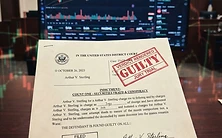
The Securities and Exchange Commission (SEC) has filed charges against CMI Capital LLC and its manager, Michael D. Williams, for allegedly orchestrating a fraudulent investment scheme that raised approximately $860,000. According to the complaint filed in the U.S. District Court for the Southern District of Florida, the scheme specifically targeted current and retired law enforcement officers, many of whom were swayed by Williams' prior affiliation with a third-party pension plan administrator. ## Forensic Red Flags The case exhibits classic signatures of affinity fraud—a type of scam where perpetrators exploit the trust within a tight-knit professional or social group. The SEC alleges that Williams used manipulated, cropped screenshots of financial data to project fake returns of over 140%. Such tactics are a common red flag in retail-targeted investment fraud, where verifiable documentation is replaced by anecdotal or falsified graphical evidence. Furthermore, the misappropriation of investor funds for personal expenses—including a sports car and credit card debt—highlights the necessity for independent third-party custody of assets, a safeguard that appears to have been bypassed in this instance. ## Analytical Perspective While the sum of $860,000 may appear modest in the context of institutional finance, the reliance on victim trust within the law enforcement community underscores a persistent vulnerability in pension oversight. As enforcement agencies like the newly formed Fraud and Asset Recovery Division in D.C. increase their focus on civil fraud enforcement, this case serves as a reminder of the heightened risk profile for retirement funds that lack strict, independent verification of portfolio holdings. ## Key Takeaways - Affinity fraud remains a potent tool for bad actors targeting public sector pension funds. - The use of falsified, cropped financial screenshots is a recurring red flag in retail investment fraud. - Independent third-party custody of assets is essential to prevent the misappropriation of funds for personal use. ## Sources - SEC Press Release — Official announcement of charges against CMI Capital and Michael D. Williams, 2026.
Original reporting by SEC Press Release. This article is desk analysis prepared by The Forensic Ledger from publicly available sources, summarized with citation to the original.
Not investment advice. This is original reporting and analysis prepared by The Forensic Ledger from publicly available data. Nothing here is a recommendation to buy, sell, or hold any security. Always consult the original source and a licensed professional. See our full disclaimer and source-citation policy.